
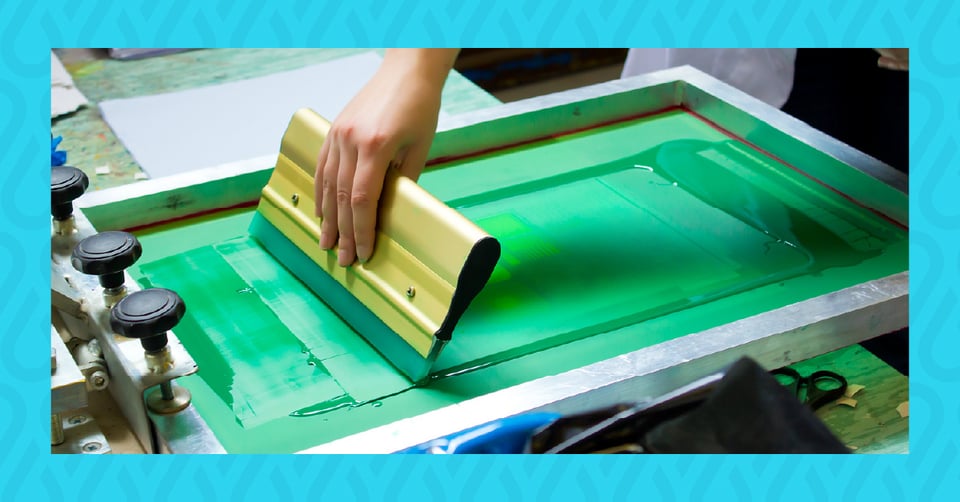
The chemicals you use in your shop impact far more than reclaim time. From print quality to screen longevity, the right screen printing chemicals help keep production consistent, efficient, and predictable.
For screen printing business owners and managers, choosing the right chemistry isn’t about adding more products — it’s about selecting solutions that work reliably within your workflow.
Why the Right Screen Printing Chemicals Matter
Screen printing chemicals influence every stage of production, especially reclaiming and press-side maintenance. When products aren’t well-matched to your process, issues can quickly surface.
Improper chemical use often leads to:
- Clogged or partially blocked screens
- Fading or inconsistent prints
- Premature mesh and frame wear
- Increased waste and disposal concerns
Well-formulated screen printing cleaning chemicals help maintain screen integrity, protect print quality, and reduce rework — all of which support smoother day-to-day operations.
Key Factors to Consider When Choosing Chemicals
Type of Inks Used in Your Shop
Different screen printing ink types require different cleaning approaches. Water based screen printing ink, plastisol, and UV inks each respond best to specific formulations.
When evaluating screen printing ink removers, consider:
- Compatibility with your ink systems
- Residue left behind before applying screen printing emulsion
- Effectiveness without excessive scrubbing
Cleaning Method Preferences
Your reclaim setup directly affects chemical performance needs.
Manual cleaning
- Common in lower-volume shops
- Requires fast-acting, easy-to-rinse products
Dip tank for screen printing
- Ideal for higher-volume operations
- Requires stable, long-lasting formulations
Dip tank–compatible chemicals help maintain consistency over extended use while reducing frequent chemical changes.
Environmental Impact and Sustainability
Many shops now prioritize chemicals that support safer handling and cleaner operations.
Look for products that offer:
- Low VOC or VOC-free formulations
- Non-flammable properties
- Safer disposal profiles
Recommended Chemicals for Efficient Screen Printing
Easiway’s EasiSolv™ 701N Screen Wash
EasiSolv™ 701N Screen Wash is designed for shops working with multiple ink systems.
Key advantages:
- Removes screen printing ink and adhesives
- Compatible with a wide range of ink types
- Suitable for daily production use
It’s a practical all-in-one option for shops looking to simplify chemical inventory.
Easiway’s EasiStrip™ Supra Ink Cleaner & Emulsion Remover
EasiStrip™ Supra Ink Cleaner & Emulsion Remover is well-suited for high-volume reclaiming, especially in dip tank systems.
Why it’s used:
- Dual-purpose ink and screen printing emulsion remover
- Designed for extended dip tank use
- Low VOC and non-flammable formulation
Other Chemical Considerations
A complete reclaim process often includes additional support products, such as:
- Degreasers for proper screen prep
- Stain removers to address ghost images
- On-press cleaners for press-side efficiency
Products like PlastiSolv™ 842 On-Press Cleaner help maintain print quality without interrupting production.
Learn more about chemicals for graphic shops.
Trust Easiway for Your Screen Printing Chemical Needs
Easiway offers a comprehensive range of screen printing chemicals designed to work together across every stage of production. Through consistent testing, ongoing formulation improvements, and practical customer support, Easiway helps shops refine their processes with confidence.
If you’re evaluating options, a sample kit bundle can help you identify the right fit for your workflow before committing fully. Choosing the right chemicals supports cleaner screens, smoother production, and more consistent results.
